The Tampa Bay Rays Pitching Development Machine
Inside Baseball's Most Innovative Pitching Factory
8/7/20259 min read
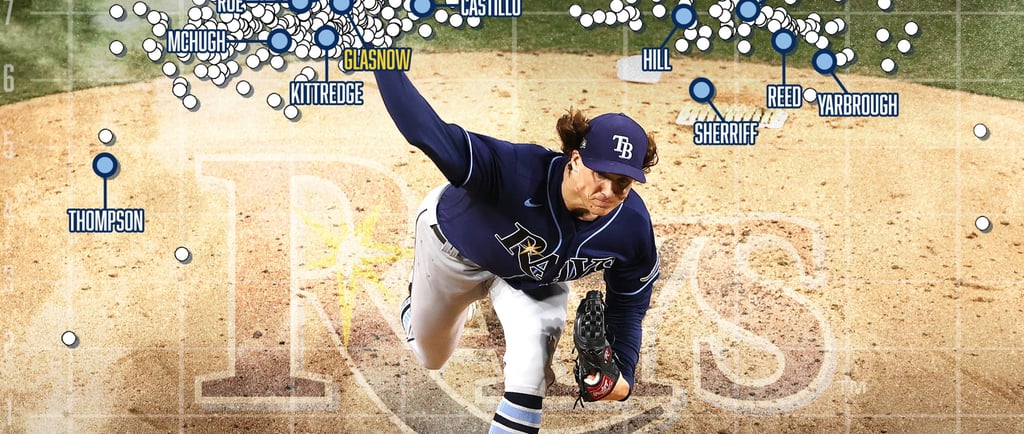
In the unforgiving landscape of Major League Baseball, where small-market teams must constantly innovate to compete with financial giants, few organizations have mastered the art of pitching development quite like the Tampa Bay Rays. Despite operating with one of the smallest payrolls in the sport, the Rays have consistently fielded elite pitching staffs, transforming overlooked arms into Cy Young contenders and reclamation projects into shutdown relievers. Their success isn't accidental—it's the product of a comprehensive, revolutionary approach to pitching development that has redefined how baseball thinks about nurturing talent.
The Architect: Kyle Snyder's Philosophy Revolution
At the heart of the Rays' pitching renaissance stands Kyle Snyder, the team's pitching coach since 2018. Unlike many coaches who rely purely on data or old-school intuition, Snyder has crafted a unique philosophy that bridges cutting-edge analytics with deeply human connection. His approach represents a fundamental shift in how pitching development should work in the modern era.
Snyder's credibility comes from an unusual source: failure. As the seventh overall pick in the 1999 MLB draft—selected ahead of future stars like Barry Zito and Ben Sheets—Snyder's own playing career was marked by injuries, inconsistency, and frustration. He compiled an 8-17 record with a 5.57 ERA over five major league seasons with the Royals and Red Sox. Rather than viewing this as a setback, Snyder transformed his struggles into his greatest coaching asset.
"It gives me a crazy platform because I'm the beneficiary of all that I've gone through," Snyder explains. "I never played the victim, but at some level, I feel like I might have been somewhat victimized in my career. The experiences that I've gone through, the frustrations that I've dealt with—I would say to some degree I think it has helped me become the pitching coach that I am."
This personal understanding of failure creates an immediate connection with struggling pitchers. When Robert Stephenson was about to be dumped by his third organization in 32 months, posting a 5.14 ERA with the Pirates, the Rays saw something others missed. Within weeks of arriving in Tampa Bay, Stephenson transformed into a bullpen weapon. The secret wasn't revolutionary mechanics or exotic training methods—it was Snyder's ability to simplify the complex and restore confidence through understanding.
The Strike One Revolution: Aggressive Zone Approach
While analytics have revolutionized baseball in countless ways, the Rays' most impactful philosophy is refreshingly old-school: throw first-pitch strikes. This isn't just a casual suggestion—it's a data-driven mandate that forms the foundation of their entire pitching approach.
The numbers are stark and undeniable. Major league hitters post an .802 OPS when ahead 1-0 in the count, compared to just .602 OPS when behind 0-1. That difference—200 points of OPS—represents the gap between facing an MVP candidate and a utility player heading back to the minors. Going back three decades, the difference remains consistently massive, proving this isn't a modern trend but a fundamental truth of hitting and pitching.
"With the quality of the stuff that we have, it gives pitchers that much more confidence to force the opposing team to hit their way on base in the first two pitches and make sure we force the chase after that," Snyder explains.
The Rays don't just talk about first-pitch strikes—they've built an entire culture around the concept. Pitchers wear t-shirts emblazoned with "64.2," representing the record for first-pitch strike percentage set by the 2018 Dodgers. It's Snyder's way of making the message omnipresent without constantly lecturing.
"It's something we shoot for," Snyder says. "It just kind of resonates, right? The guys wear the T-shirt. They see it. The message is always being delivered without you have to deliver it."
The results speak volumes. Combined, Rays starters and relievers have led the majors in strike percentage (67.8%) in recent seasons, and they've ranked in the top five of this category every year since 2019—the year after Snyder arrived. This aggressive zone approach requires supreme confidence in stuff quality, which brings us to another crucial element of their philosophy.
Movement Over Velocity: The Art of Space Creation
In an era obsessed with triple-digit fastballs and spin rate, the Rays focus on something more fundamental: movement. Snyder prefers the old-school term "space creation" to describe what makes their pitchers effective, bridging traditional scouting concepts with modern technology.
The Robert Stephenson transformation illustrates this perfectly. While other teams focused on his spin rate and velocity, Snyder showed Stephenson how to elevate his fastball, especially with two strikes. The average height of Stephenson's fastball jumped from 2.55 feet off the ground with Pittsburgh to 2.92 feet with Tampa Bay. That difference—just 4½ inches, about the equivalent of a baseball and a half—resulted in 81 points less batting average and 96 points less slugging percentage against his fastball.
"Movement is what we're looking for," Snyder emphasizes. "We're looking for space creation."
This philosophy extends beyond just fastball location. The Rays focus on helping pitchers understand how their entire arsenal works together to create deception and uncomfortable at-bats for hitters. Rather than maximizing individual pitch characteristics, they optimize how pitches complement each other within a pitcher's unique delivery and arm slot.
The Human-First Approach: Individual Development Plans
Perhaps the most revolutionary aspect of the Rays' development system is their rejection of one-size-fits-all coaching. Snyder and his staff create individualized approaches for each pitcher based on personality, learning style, information processing ability, and personal motivation.
"I really try to prioritize the human being," Snyder explains. "The building of a relationship, understanding that establishing trust takes time. There is an element of trial and error to a lot of what we do as coaches, and without that trust it's going to be difficult to connect and reach guys and/or influence their careers."
This human-first approach manifests in dramatically different coaching styles for different pitchers. Diego Castillo, with his long organizational history, trusts Snyder enough that he'll only bring something forward if it's critically important. Meanwhile, Pete Fairbanks wants every piece of available information. The coaching staff adapts their communication style to match each pitcher's needs.
When Tyler Glasnow arrived from Pittsburgh in 2018, he was struggling with command and confidence. Rather than overwhelming him with new information, Snyder kept his first instruction devastatingly simple: "Middle. Aim to bigger areas." Over his first 12 innings with Tampa Bay, Glasnow allowed just three runs while walking only three batters and striking out 20. The Rays had freed him from Pittsburgh's sinker-heavy, corner-painting approach, encouraging him to attack with four-seam fastballs elevated in the zone.
Simplifying Complexity: The Data Integration Model
The Rays possess some of the most sophisticated pitching analytics in baseball, but their genius lies not in data collection but in data presentation. They understand that information overload can paralyze performance, so they focus on delivering only the most crucial insights in digestible formats.
When Cody Reed joined the organization, he was presented with a comprehensive binder containing data from his entire professional career. However, rather than forcing him to process everything immediately, the coaching staff cherry-picked the most relevant information and presented it in simple, actionable terms.
"We could throw five, six, seven different things at the pitchers, but I don't know how beneficial that would be to their time, their career in that given moment," explains catcher Mike Zunino. "So that's what makes Kyle and Stan very special in that they're able to just condense everything and pretty much cherry-pick what they value as the most important and really harp on that."
Snyder describes his approach like a teacher: breaking down broader points into sound bites, incorporating visual aids to accelerate learning curves, and using evidence to remove opinions from the equation. The goal is to take pressure off pitchers so they can focus on executing pitches rather than processing information on the mound.
The Reclamation Project Factory
The Rays have become baseball's Antiques Roadshow of pitching, consistently identifying undervalued assets that other organizations have given up on. Their track record of transforming struggling pitchers is unmatched in modern baseball.
Tyler Glasnow arrived from Pittsburgh as a wild, ineffective starter and became a dominant force. Drew Rasmussen was claimed off waivers from Milwaukee and developed into a front-line starter. Pete Fairbanks was acquired in a minor trade and became an elite closer. Jeffrey Springs was a Rule 5 pick who evolved into a reliable rotation piece before injury.
The common thread in these success stories isn't superior stuff—it's superior understanding of how to unlock existing potential. The Rays don't try to completely rebuild pitchers; they identify the one or two adjustments that can maximize effectiveness.
"There's a lot of different ways to say, 'Trust your stuff,'" Snyder notes. "Context matters. It's pretty powerful. I don't think that's a secret throughout the industry, but I think it's just a matter of how you message things for people to understand it."
Farm System Excellence: Building from the Ground Up
The Rays' pitching development success extends far beyond the major league level. Their farm system consistently produces quality arms through a coordinated organizational approach that begins in rookie ball and continues through Triple-A Durham.
The organization's minor league system features promising young arms at every level. Santiago Suarez, just 20 years old, has shown tremendous potential in Single-A and is considered one of the system's most promising young pitchers. Jackson Baumeister, currently ranked No. 3 in the system at age 21, represents the type of steady developmental success the Rays have mastered.
The consistency of development across levels isn't accidental. The Rays employ the same philosophical approach throughout their system, ensuring that pitchers receive consistent messaging as they advance. This organizational alignment means that by the time prospects reach the major leagues, they're already familiar with the Rays' approach and philosophy.
The Durability Factor: Keeping Arms Healthy
One of the most impressive aspects of the Rays' pitching development is their ability to maximize innings from their starters while maintaining arm health. Despite typically featuring younger, less established pitchers, they've consistently ranked among the league leaders in starter innings and overall staff durability.
This success comes from their emphasis on efficient pitch usage and smart game management. By getting ahead in counts consistently, Rays pitchers work more efficiently, requiring fewer pitches per inning and per game. The aggressive strike-throwing approach actually reduces stress on arms by minimizing deep counts and extended at-bats.
The organization also emphasizes proper biomechanics and recovery protocols throughout their system. Rather than simply trying to increase velocity, they focus on sustainable delivery mechanics that can hold up over a full season and entire career.
Innovation Within Tradition: Balancing Old and New School
What makes the Rays' approach so effective is their ability to blend cutting-edge analytics with time-tested baseball fundamentals. They don't reject traditional scouting or old-school pitching concepts; instead, they use data to validate and optimize traditional approaches.
The first-pitch strike emphasis is ancient baseball wisdom supported by modern analytics. The focus on movement and command over raw velocity echoes what successful pitchers have understood for generations. The individual approach to each pitcher reflects what good coaches have always done, just with better information and more systematic application.
This balance allows the Rays to appeal to both old-school players who value traditional concepts and analytically-minded pitchers who want to understand the science behind their success. It creates buy-in across their entire organization and helps explain why their developmental approach translates so effectively to game performance.
Organizational Culture: More Than Just Techniques
Behind all the tactical innovations lies a deeper organizational culture that prioritizes growth, learning, and continuous improvement. The Rays create an environment where failure is viewed as a learning opportunity rather than a career threat.
This culture starts at the top with management and filters down through every level of the organization. Pitchers know they'll be supported through struggles and that the organization will invest time and resources in their development. This psychological safety net allows pitchers to take risks and make adjustments without fear of immediate consequences.
The t-shirts, the data presentations, the individualized coaching approaches—they all serve to reinforce this culture of continuous improvement and mutual support. When pitchers believe their organization is genuinely invested in their success, they're more willing to embrace new ideas and work through difficult periods.
The Future of Pitching Development
As other organizations attempt to replicate the Rays' success, the question becomes whether their approach can be copied or if it requires the unique organizational culture and personnel they've developed. The early evidence suggests that while specific techniques can be borrowed, the holistic approach requires long-term commitment and the right personnel.
The Rays continue to innovate within their established framework. They're constantly refining their data collection and presentation methods, developing new ways to communicate complex concepts, and adapting their approach to new generations of players. Their success isn't static—it's a continuous evolution based on consistent core principles.
As baseball continues to change, the Rays' approach offers a template for how organizations can balance innovation with fundamentals, data with humanity, and organizational efficiency with individual development. Their pitching development revolution isn't just about creating better pitchers—it's about creating a better way to develop human potential in a competitive environment.
The Tampa Bay Rays have proven that with the right philosophy, personnel, and commitment, even the smallest-market teams can compete at the highest level. Their pitching development success offers hope to organizations everywhere that sustainable excellence is possible through smart systems, innovative thinking, and a genuine commitment to helping individuals reach their full potential. In a sport increasingly dominated by money and resources, the Rays remind us that the most valuable resource of all remains human ingenuity and care.